| On Sunday, September 8th the Sayville Fire Department participated in a county-wide drill at the Suffolk County Fire Academy in Yaphank. The purpose of this drill was to simulate a large-scale incident where multiple responding agencies (police, hazmat, technical rescue, etc.) had to work together in an effective and cohesive manner under highly stressful conditions. Approximately 300 people took part in this disaster simulation from Nassau and Suffolk County.
The drill's deployment orders were faxed to the firehouse as follows:
"On Friday, September 7, 2007 at approximately 1900 hours, an F3 tornado struck Riverhead Town during a severe weather event. Extensive damage has occurred to several structures with reports of numerous injuries, missing and trapped victims.
Suffolk County OEM has issued a request for resources from numerous agencies and your agency has been requested to respond to the staging area located at the SW corner of Glover Drive and Yaphank Avenue and respond to the staging officer no later than 0800 hours for assignment during the next operational period.
All responding agencies are expected to respond with proper equipment for an event of this magnitude and enough supplies to remain self-sufficient for a 5 hour period."
Sayville's bravest geared up and took one pumper with a crew out to the site of the "tornado". Multiple emergency scenarios were staged on the grounds to simulate a real disaster area at the Suffolk County Fire Academy& and it did look like a disaster area! Vehicles were overturned and into buildings, hazardous material containers were on the grounds, buildings and a tanker was on fire. There were also collapse and trench rescue emergencies. We can't forget the victims&some human and some "dummies". The scenarios were set up to put a variety of specialized skills of each responding organization to work.
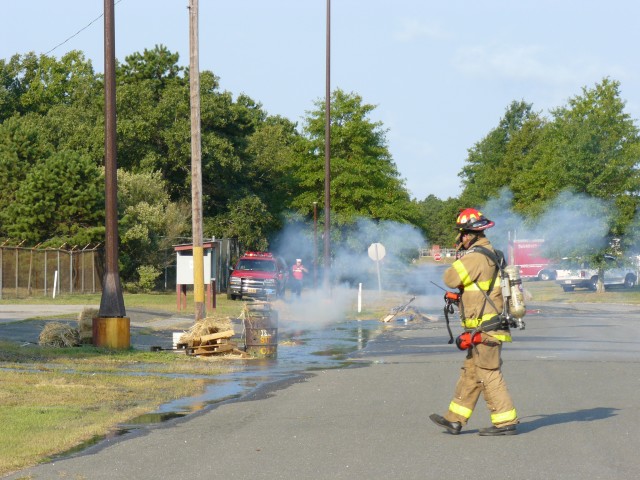
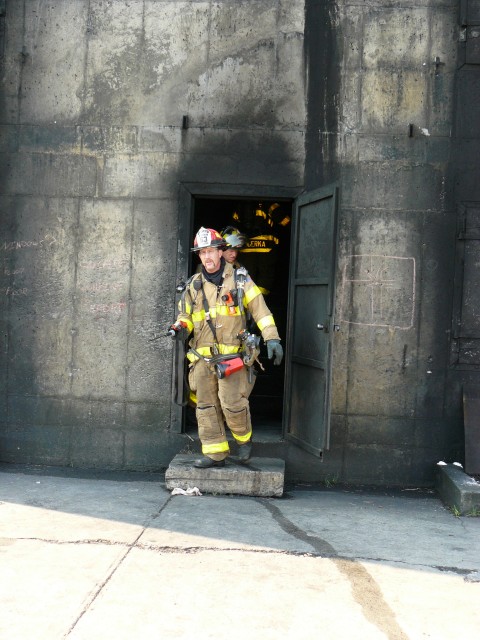
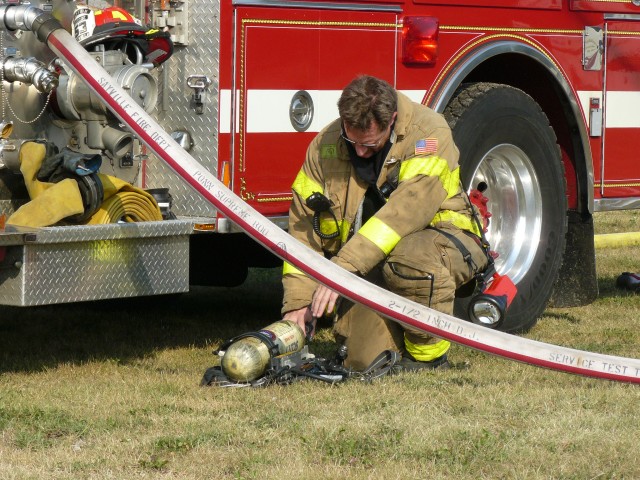
Shortly upon arrival at the staging area, the drill began. Sayville's crew was ordered by Incident Command to go to the scene of a burning building. En route to the assigned location, firefighters noticed two unmarked drums burning in the street. Incident Command was notified of the issue. Firefighters took caution and parked upwind from the burning drums and sent two firefighters in full protective gear and self-contained breathing apparatus (SCBA) to check for toxic gases with the gas meter. Once it was determined that the area was safe from toxic gas, they advised Incident Command of the status and pulled the engine up into position and commenced a search of the building. Shortly after, West Islip entered the building and joined the search. No fire was found, but Sayville discovered two "DOA's" in the building. These findings were communicated to Incident Command, who told Sayville and West Islip to stand by for an additional assignment.
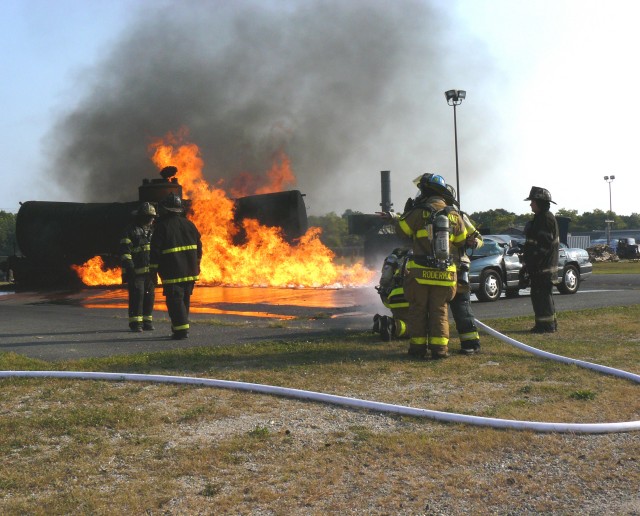
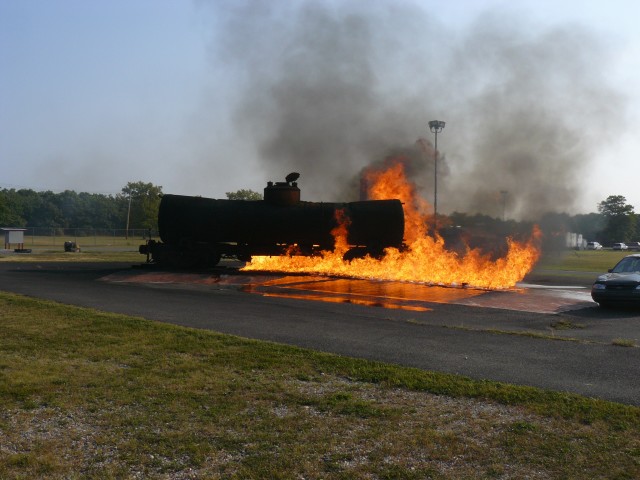
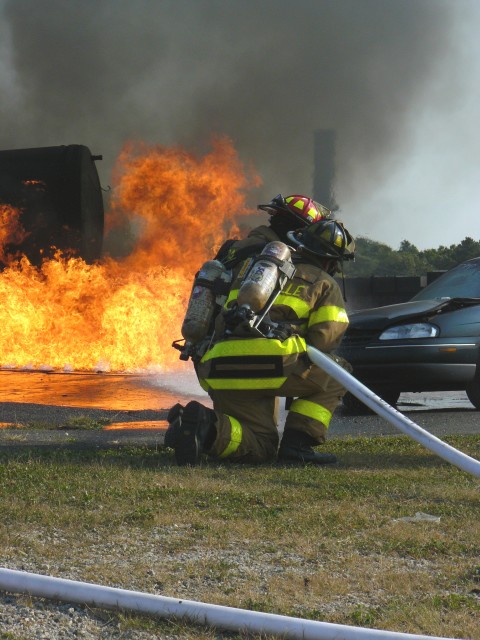
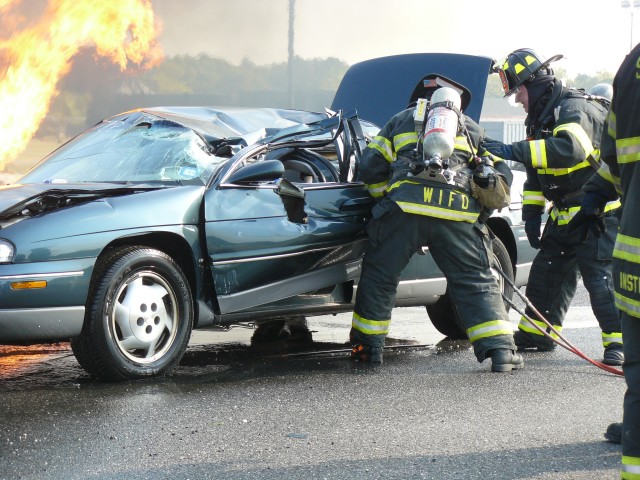
The Sayville crew was then called to the scene of a tanker fire with a nearby car containing two trapped victims. Incident Command advised that all hydrants were inoperable. Upon arrival, Sayville notified Incident Command that heavy rescue was required for the trapped victims and that a tanker was needed for additional water supply.
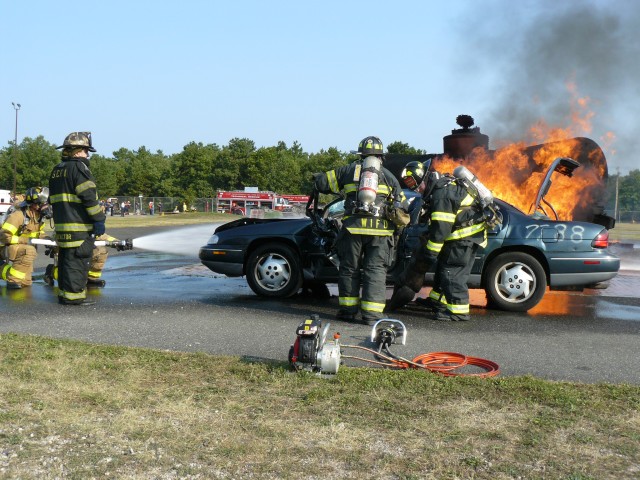
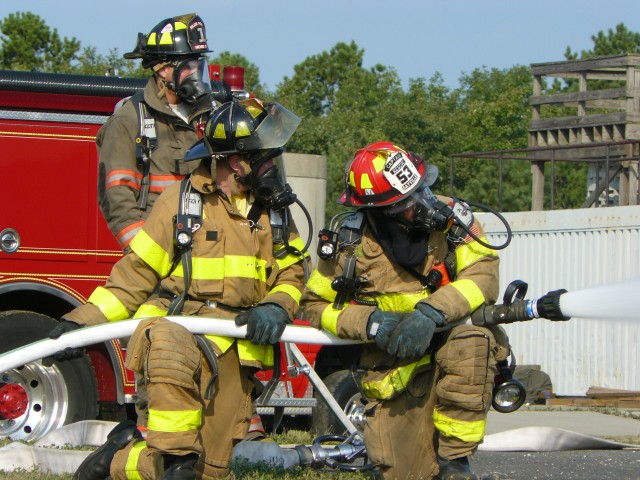
Sayville Firefighters pulled a 2" hand line and charged it with tank water. Firefighters knew that they had to protect the passengers in the nearby car from the flames and heat (Note: County instructors did not want Sayville to quickly extricate the victims after making access with hand tools because that job was to be assigned to the West Islip crew which was activated to the scene as part of this drill. Had this been a real scenario, Sayville would have used their hand tools and quickly pulled the victims to safety because they were in imminent danger). Firefighters kept the car cool by providing a barrier between the tanker and the car using a fog pattern stream and by keeping the gas tank cool.
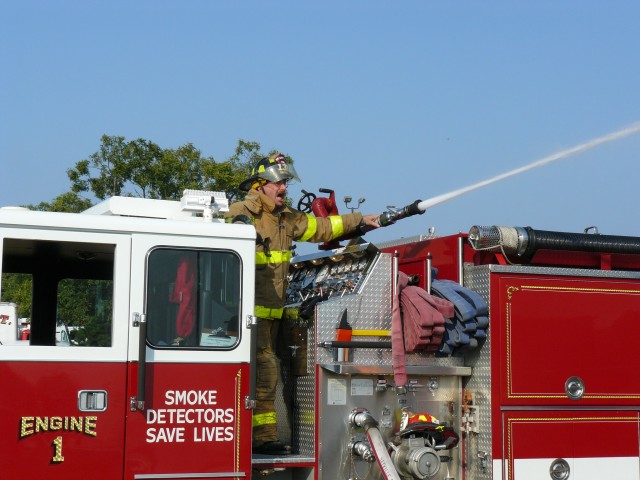
West Islip firefighters rolled in and were given orders to begin extricating the trapped passengers while Sayville was still operating the protection line on their own tank water. Blue Point Fire Department members rolled in and pulled a 2 ½" hand line and began fighting the tanker fire. Sayville also put its deck gun into action to get more water on the tanker. Once the passengers were extricated, the firefighters on Sayville's hose line changed position and also began battling the blazing tanker fire.
Throughout this tanker scenario, various water supply issues arose such as inoperable hydrants and limited tank water. Skilled Chauffeurs from all three departments worked together to adapt to the changing water supply situation and kept the water flowing with very little interruption. Luckily, just after the two pumpers ran out of water (and options), Incident Command notified the team that the water main had been repaired and hydrants were operable. Hydrant water supplied the engines again and the fight to put out the tanker fire continued.
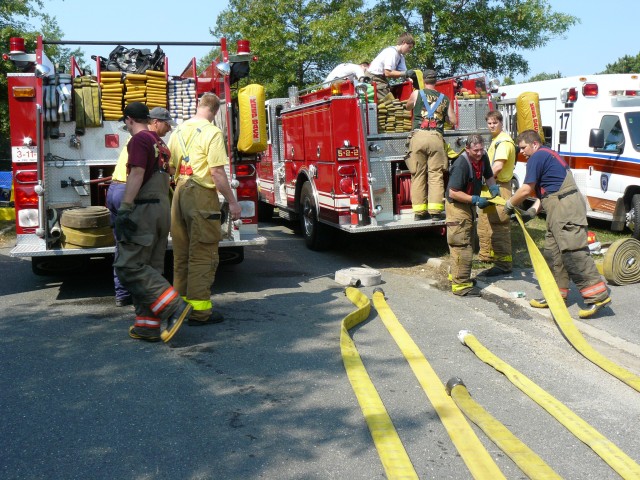
Incident Command notified the team that their part of the drill was over. These three departments gave each other a hand with packing up hundreds of feet of hose.
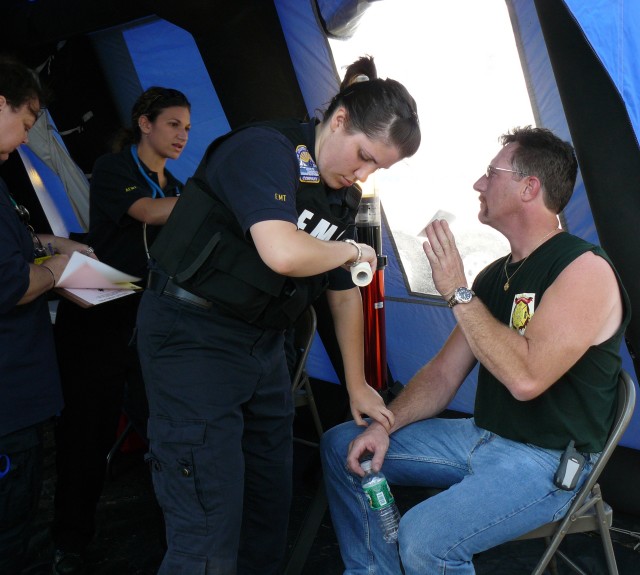
After this strenuous drill, all members that worked on this tanker scenario were directed to the medical tent for rehab. Firefighters' vitals were checked and eventually cleared to leave for the day.
Sayville firefighters put their extensive training and experience to use during this drill. They showed that they are able to work effectively under extreme pressure and to quickly adapt to changing conditions. In addition, they showed that they are able to team up with firefighters they've never worked with before to and get the job done. |